

What Makes a Good Timber Specification
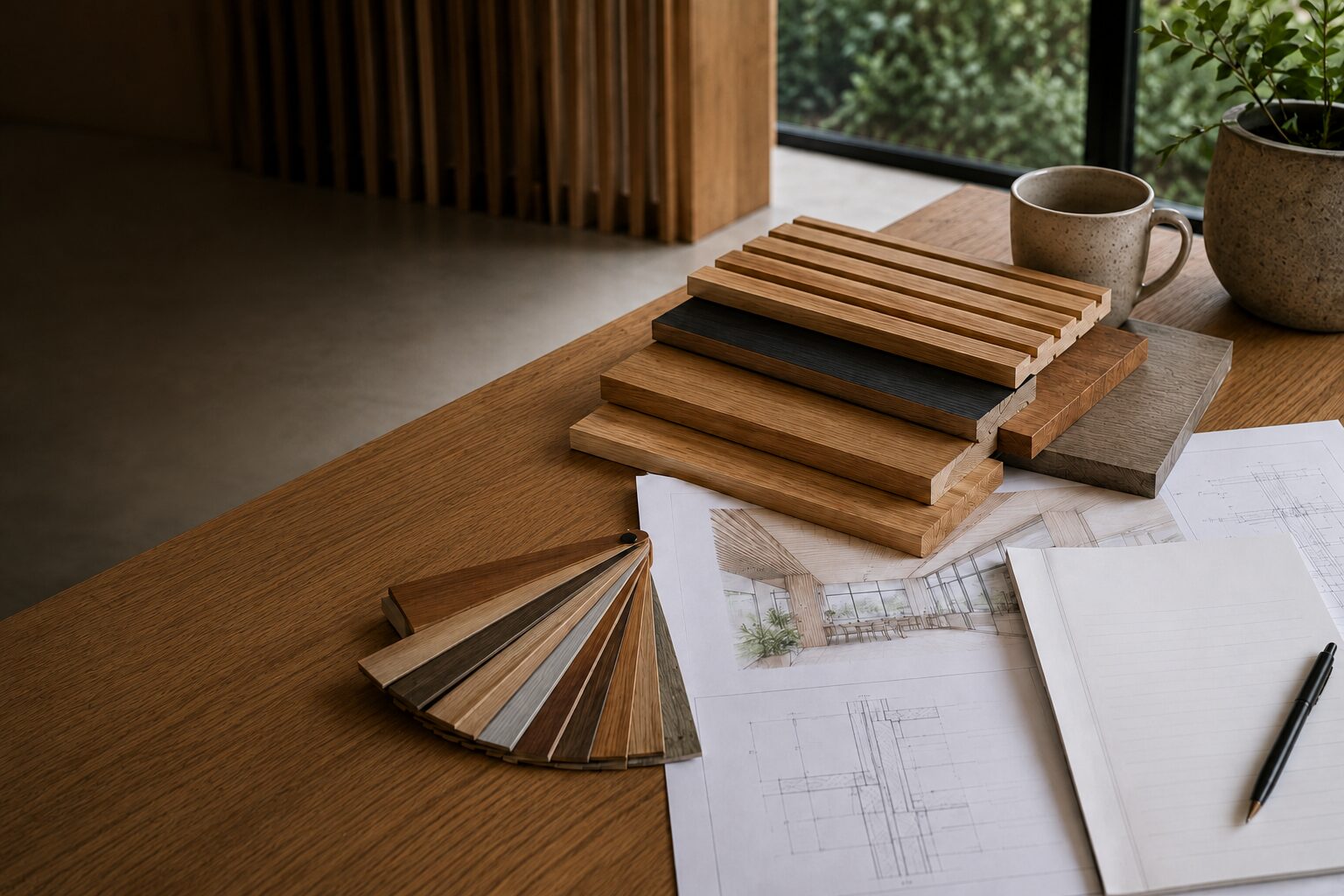
A well-written specification is the difference between a project that runs to programme and a project that runs into questions on site. Timber is one of the most rewarding materials to specify, with depth of grain, tonal variation, and natural character that few other materials can match. It is also one of the materials most exposed to ambiguity if the brief is not tight. Species, grade, profile, finish, fixing, and tolerance all matter, and each one becomes a decision somewhere down the line. The clearer those decisions are at the specification stage, the smoother the path from drawing to delivery to installation. This guide walks architects, builders, and specifiers through what to include in a timber specification and how to brief Timbeck for a useful quote in return.
Start With the Application
Every timber decision flows back to where the material is going and what it has to do. Internal panelling, external cladding, soffits, decking, joinery, and architectural screening all have different demands on durability, dimensional stability, and finish. A species that sings on an internal feature wall may be the wrong choice on a north-facing facade in coastal Queensland. Begin with the application and the exposure, then work back to the species and the profile.
Species Selection
Species selection is rarely about a single attribute. It is about how the timber’s appearance, density, durability, and origin line up with the brief. Some shortcuts that work for most projects:
- Western Red Cedar: lightweight, low shrinkage, fine grain, naturally durable, ideal for cladding, panelling, soffits, and shutter components in moderate exposure
- Spotted Gum: dense Australian hardwood, rich tonal range, suited to high-traffic external applications and feature interiors
- Blackbutt: pale and even Australian hardwood, robust performance, suited to cladding and decking where consistent colour matters
- American Oak: refined grain and pale tone, well suited to interior panelling and joinery
- Hemlock: clean and consistent imported softwood, popular for panelling, soffits, and shutter components
- Thermal Wood: heat-treated for improved dimensional stability and a deeper, more uniform tone
Detailed product information sits on the hardwood products and cedar products pages, with cross-references to specific species.
Profile and Module
Profile choice influences both visual rhythm and water shedding. Shiplap profiles give a continuous flat surface with minimal line work, ideal for clean contemporary facades. Channel and groove profiles deliver more rhythm and shadow, better suited to mid-century and warmer modern designs. Open-jointed cladding gives a dramatic, deliberate gap and reads strongly at distance, useful for civic and commercial scales. Confirm the module width, the cover width, and the gap or overlap dimensions in the specification, not just the species and finish.
Where the standard profiles do not match the design intent, custom machining allows for bespoke profiles, mouldings, and architraves machined to your drawings.
Finish and Coating
The finish on the timber determines how the building looks on day one and how it ages over the next decade. Factory-applied coatings are typically more uniform and longer-lasting than on-site coatings, and they allow all six faces of the board to be sealed before the board ever arrives on site. The coating and finishing service runs a wide range of systems suited to interior and exterior use, and the colour range shows the standard tones available. For projects with custom colour or sheen requirements, the team can match to a reference sample.
Sustainability and Certification
Specifying certified timber is now a standard part of most briefs, particularly for projects targeting Green Star, NABERS, or local sustainability commitments. Timbeck is a PEFC-certified supplier and stocks a range of PEFC and FSC certified timber. Confirming the certification requirements in your specification ensures the right paperwork comes through with the delivery, and reduces the chance of late changes during the assessment phase.
The Information We Need to Quote
A clear quote is built on a clear brief. The most useful information to include when reaching out for pricing:
- Project location, orientation, and exposure category
- Linear metres or square metres of each item, with allowances for waste
- Preferred species, or a shortlist for us to advise on
- Profile and cover width
- Finish and colour, or a request for our recommendation
- Required certification
- Construction programme and required delivery date
- Any specific authority, BAL, or sustainability requirements
Send the brief through our quote page or our contact page. For projects that sit outside the standard range, our customised solutions service is the best starting point.
Specifying With Confidence
A specification is the most useful document on the project. Done well, it commits the right choices to writing before they become rushed decisions on site. Done loosely, it leaves room for the wrong delivery, the wrong colour, or the wrong programme. The Timbeck team has worked with architects and builders across Australia for more than 50 years, and we are happy to review draft specifications, recommend species and profiles, and bring our experience to bear early in the process. Get in touch and we will help you tighten the brief.
