

The Quiet Power of Timber Panelling
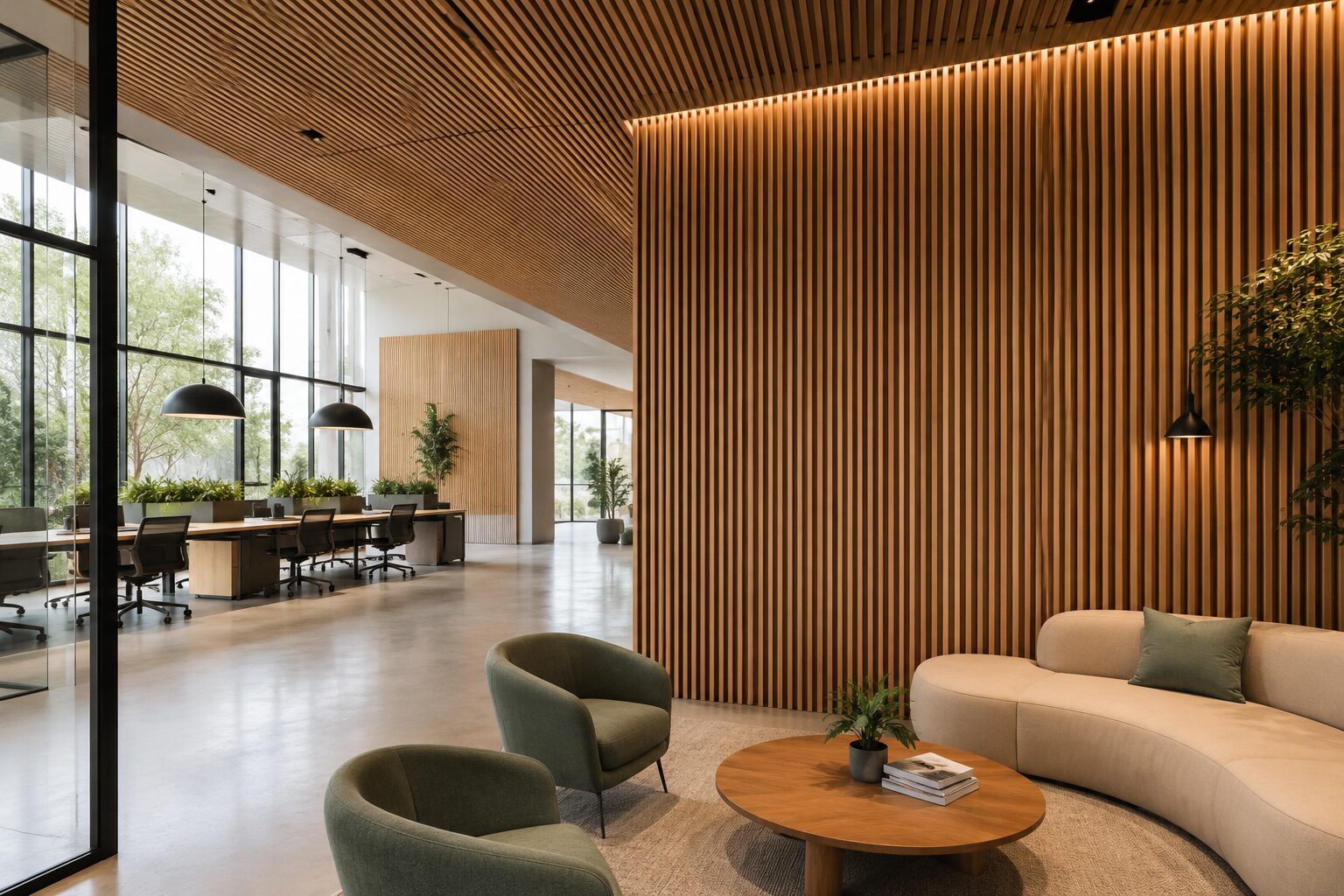
Open-plan offices, foyers, hospitality venues, and public buildings all share a common design challenge. They need to look generous and welcoming, while still being comfortable to occupy, speak in, and listen in. Hard surfaces of concrete, glass, and steel deliver the contemporary look that architects and clients often want, but they reflect sound aggressively, building reverberation that makes spaces feel busy, tiring, and harder to use. Acoustic timber panelling is one of the cleanest answers to that problem. It absorbs sound, breaks up surfaces, and brings warmth into spaces that can otherwise feel clinical, all without compromising the contemporary aesthetic the project is built around. This guide is for architects and specifiers thinking about how to use timber to control sound in workplaces and public spaces.
Why Acoustics Matter in Modern Interiors
The shift to open-plan layouts, high ceilings, and exposed finishes has improved daylight, sightlines, and the sense of space in modern buildings, but it has also amplified reverberation. In a workplace, that translates to fatigue, harder phone calls, and reduced productivity. In hospitality, it shows up as guests struggling to hear each other across the table. In schools and lecture spaces, it directly affects how well students can hear instruction. Building codes set minimum standards, but well-designed acoustics go beyond compliance and into how a space genuinely feels to occupy.
How Slatted Timber Panels Work
Acoustic timber panels generally work on one of two principles. The first is profile-based, where shaped or slatted boards create gaps that allow sound energy to enter the panel cavity and dissipate. The second is backing-based, where slatted boards are mounted over an acoustic substrate, typically a black non-woven felt or a mineral wool layer, which absorbs the sound that passes through the gaps. The combination of timber face and absorbent backing gives you the visual warmth of solid timber and the acoustic performance of a purpose-built acoustic system.
Timbeck’s hardwood panelling and softwood panelling ranges can be supplied with slatted profiles suitable for acoustic applications, with profiles, spacings, and finishes machined to meet your specification.
Choosing Species and Profile
Species choice for acoustic panelling is a balance between visual outcome, environment, and budget. Native hardwoods such as Spotted Gum and Blackbutt deliver depth of grain and a richer tonal range, making them well suited to feature walls in lobbies and boardrooms. Imported softwoods such as Western Red Cedar and Hemlock give a lighter, more even appearance that works particularly well in expansive ceiling installations and hospitality fit-outs. Thermally modified timber offers an alternative tonal range and improved dimensional stability for tighter-tolerance installations.
Profile choice affects both visual rhythm and acoustic performance. Narrower slats with smaller gaps deliver a finer texture but absorb a narrower range of frequencies. Wider slats with larger gaps and a deeper backing are typically more effective in broader frequency control. The Timbeck team can help you match profile to acoustic objective during the specification phase.
Where Acoustic Timber Performs Best
Applications that consistently deliver good results include:
- Open-plan offices and collaboration zones, used as ceiling rafts or feature walls
- Boardrooms, training rooms, and lecture theatres, where speech intelligibility is critical
- Hotel lobbies and reception areas, where warmth and quiet both matter
- Restaurants and cafes, particularly those with hard floors and exposed ceilings
- Educational buildings, including libraries, classrooms, and shared learning spaces
- Healthcare waiting areas, where calm is part of the brief
Many of these applications combine acoustic panelling with architectural screening, allowing the same visual language to flow from wall to ceiling to partition. Our architectural screening and architectural screening softwood ranges share machining options with our panelling range, giving you flexibility across an entire scheme.
Specifying for Coordination
An acoustic panelling system is more than a finish. It interacts with services, lighting, fire protection, and structural sub-frames. The earlier the system is brought into the design coordination process, the easier it is to integrate cleanly. Useful information to confirm at specification stage includes panel module size, fixing method, integration with linear LED fittings or recessed services, fire performance requirements for the space, and any sustainability targets such as Green Star or NABERS credits the panel needs to support.
Pre-coated finishes from our coating and finishing service make installation faster and the final result more consistent, particularly in ceiling rafts where on-site coating is difficult.
Talk to Us Early
The right acoustic panelling system can transform how a space sounds and how it feels. It is also one of the elements that benefits most from early conversation, because the profile, backing, fixing, and finish all influence what is possible. Get in touch through our contact page or request a quote, and our team will help you specify a system that meets the acoustic, aesthetic, and budget objectives of your project.
